
Address:
980 N Main Street
Bluffton, IN 46714


Diabetes and the Eyes
Why Do People With Diabetes Need Eye Exams?
When someone has diabetes, one of the most important places to monitor its effects is the eye because diabetes primarily causes damage by affecting the smallest blood vessels in the body.
Over time, elevated blood sugar can injure these tiny vessels, causing them to weaken, leak fluid or blood, or slowly scar and close off altogether. When this happens, the tissues they supply do not get the oxygen and nutrients they need to stay healthy.
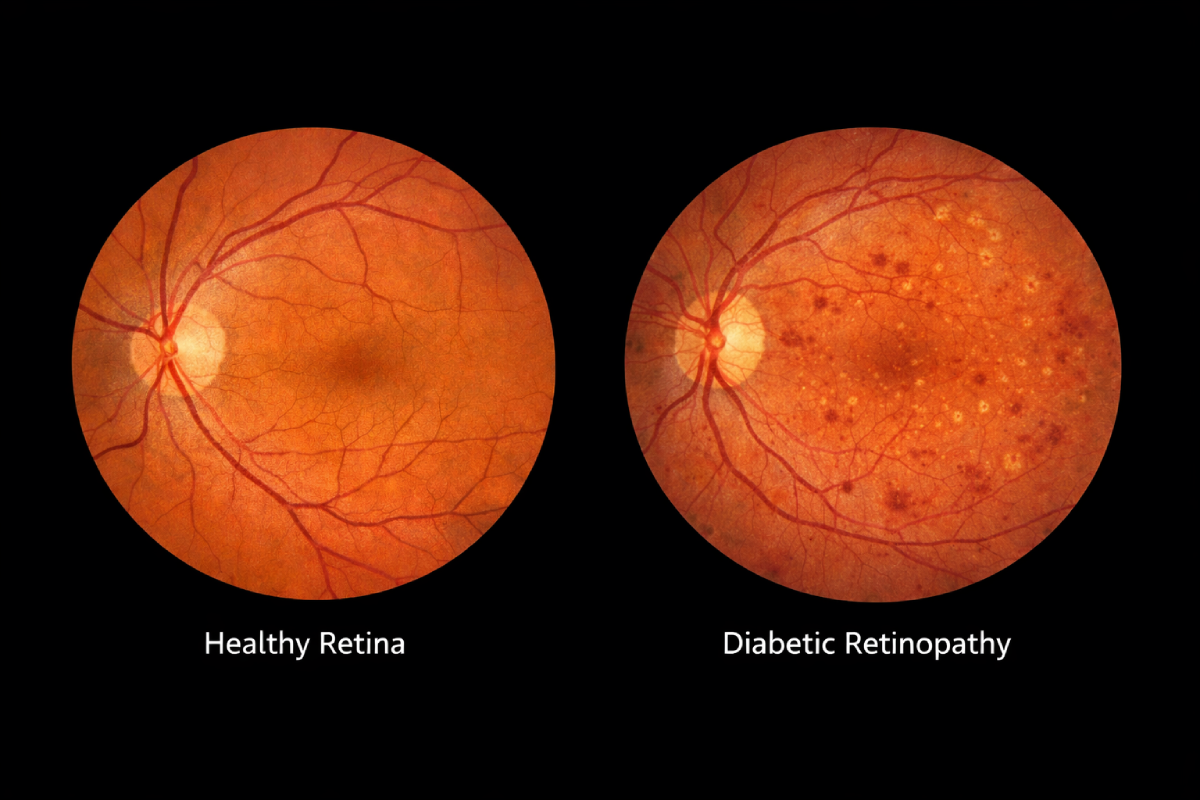
The eye is unique because it is the only place in the body where doctors can directly see these small blood vessels. Through a dilated eye exam, we have a clear “window” to observe how diabetes may be affecting blood vessels in real time.
Because of this, examining the eyes of people with diabetes does more than protect vision,it provides valuable information about how diabetes may be affecting the body overall. After your exam, we often share our findings with your primary care doctor or endocrinologist so your entire healthcare team can work together to manage your diabetes as effectively as possible.
What Is Diabetic Retinopathy?
Diabetic retinopathy is an eye condition that can develop in people who have diabetes. Simply put, when blood sugar levels are high enough for long enough, they damage the smallest blood vessels in the retina, the light‑sensitive tissue at the back of the eye that allows you to see.
Early on, these changes often cause little to no noticeable vision change, which is why many people are surprised by the diagnosis. Over time, as more blood vessels become damaged, vision can become blurred or distorted, dark spots may appear, and permanent vision loss can occur if the condition is not monitored or treated.
How Does Someone Get Diabetic Retinopathy?
Diabetic retinopathy most often develops when blood sugar levels are not well controlled over time. The good news is that with consistent blood sugar control, along with management of blood pressure and cholesterol, diabetic retinopathy is often preventable, or its most serious vision‑threatening complications can be significantly reduced.
Even people with good vision and no symptoms can have diabetic retinopathy, which is why regular dilated eye exams are so important.
How Is Diabetic Retinopathy Treated?
Treatment depends on the stage and severity of the condition.
In mild or early cases:
- Careful monitoring
- Optimizing blood sugar, blood pressure, and cholesterol
In more advanced cases, treatment may involve referral to a retinal specialist, an eye doctor with advanced training in diseases of the retina.
Common treatments may include:
- Injectable medications to reduce swelling and abnormal blood vessel growth
- Laser treatments to stabilize damaged retinal areas
- Surgical procedures in severe cases
We work closely with retinal specialists to ensure timely care and coordinated follow‑up.
The Goal: Protecting Your Vision Long‑Term
Diabetic retinopathy is one of the most common causes of vision loss in adults, but it is also one of the most preventable with regular care.
Routine eye exams, good diabetes management, and early treatment when needed can dramatically reduce the risk of vision problems.
If you have diabetes, even if your vision feels normal, annual dilated eye exams are one of the most important steps you can take to protect your sight.
If you ever notice sudden vision changes, new floaters, blurred or distorted vision, or dark areas in your vision, contact our office promptly.
Quick Links

All Eye
Care Services

Keep
In Touch
© 2026 Eyecare Associates of Bluffton and Roanoke. All Rights Reserved. Accessibility Statement - Privacy Policy - Sitemap
Powered by: 
